Roofing in Lower Paxton, PA, Starting With a Straight Answer

We trace every leak from the attic and the roof, tell you whether a repair will hold, and price the work line by line before anything is torn off.

Lower Paxton Roofing brings more than 20 years of roofing experience to homeowners in Lower Paxton, PA, handling roof repair, leak tracing, full roof replacement, slate, metal and flat roofs, gutters and storm damage. We work on the houses that fill this township, from 1950s houses to newer townhouse rows, and we price every job on a written scope you can check line by line.

Our starting point is always the same question: does this roof actually need replacing? On a leak call we inspect the attic as well as the roof surface, because the stain on the ceiling is rarely where the water gets in. You get a plain answer on repair before replacement is ever priced.

When a new roof is the right call, we check your own municipality’s permit rule, set out the tear-off, decking, underlayment, flashing, ventilation and gutters as separate lines, and plan the work day around a house that people are still living in.

Get Your Free Quote

Fast response • No obligation

So we can reach you about your request.

So we can send you a confirmation after you submit this inquiry form.

  • 20+ Years Roofing
  • Itemized Written Scopes
  • Repair Before Replace

What we do

Our Services

Roof repair and replacement for Lower Paxton and central Pennsylvania

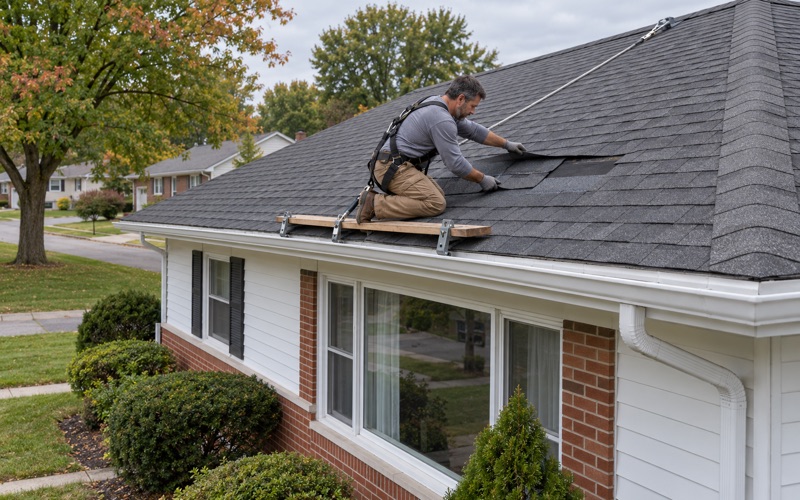
A roofer sliding a matched replacement shingle into a gap on the roof of a 1950s ranch in Colonial Park, Lower Paxton Township.

Roof Repair

Shingle, flashing, slate and low-slope roof repair in Lower Paxton, with the leak traced from the attic and the repair priced in writing.

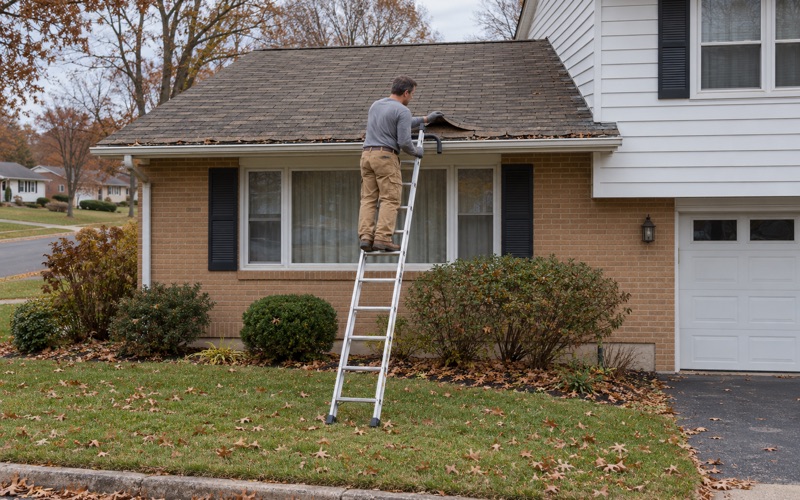
A roofer inspecting curled shingles and loose granules at the eave of a 1960s split-level in Lower Paxton Township.

Roof Inspection

Roof and attic inspections in Lower Paxton for buyers, sellers, storm checks and aging roofs, with photos and a written condition report.

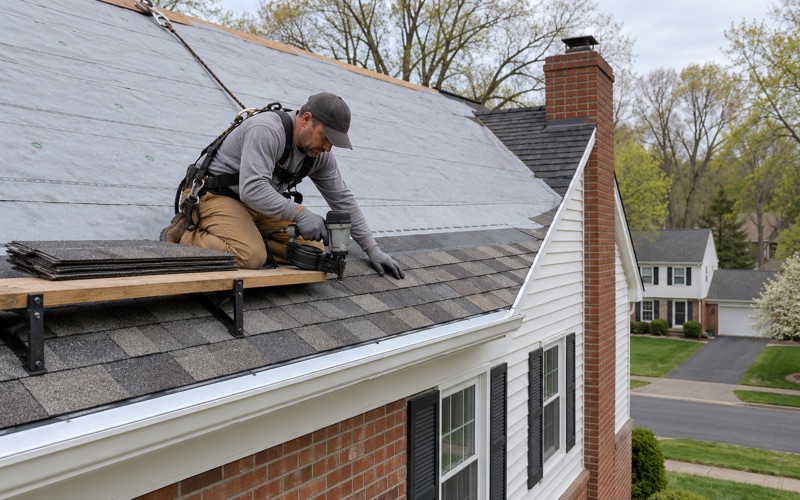
The first courses of new shingles nailed in above the drip edge on a full roof replacement on a 1970s colonial in Lower Paxton Township.

Roof Replacement

Full roof replacement in Lower Paxton with tear-off to the deck, new flashing, balanced ventilation and an itemized written scope.

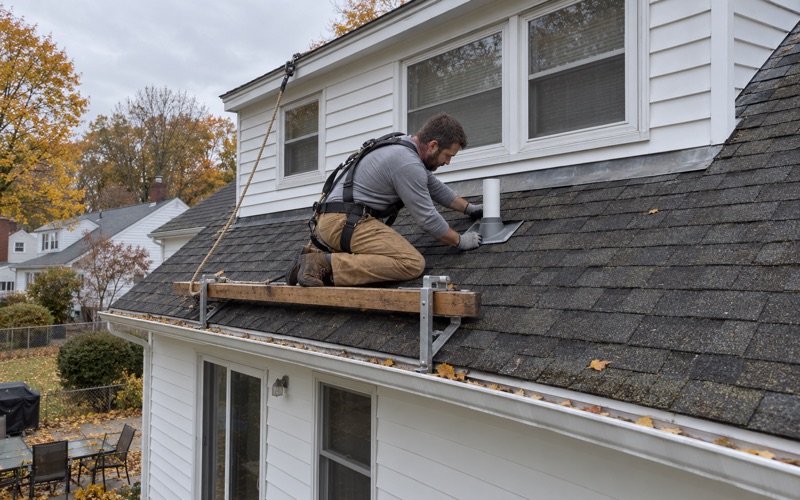
A new pipe boot being lapped into the shingle courses to stop a leak on a 1950s Cape Cod in Lower Paxton Township.

Roof Leak Repair

Roof leak tracing and repair in Lower Paxton, starting in the attic so the water is followed to where it actually gets in.

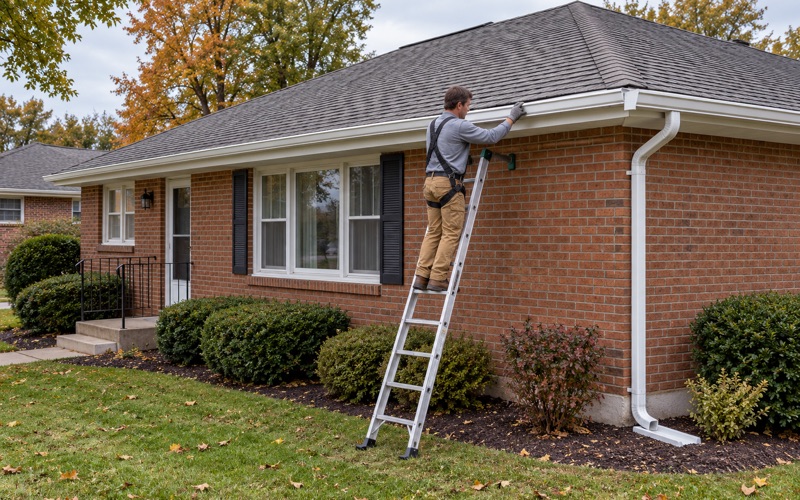
A seamless aluminum gutter being set into its hidden hangers along the eave of a 1960s ranch in Lower Paxton Township.

Gutter Installation

Seamless aluminum gutters, downspouts and gutter guards in Lower Paxton, sized and pitched to carry what the roof actually sheds.

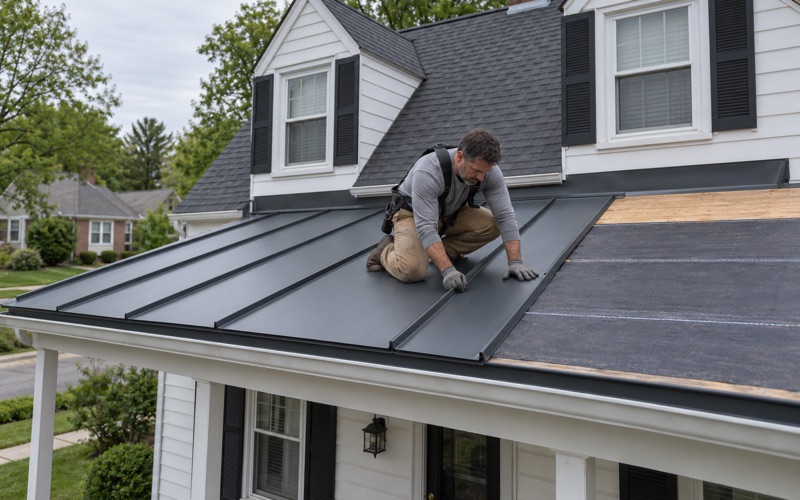
Steel panels with raised seams going on the low-pitch front porch roof of a 1950s Cape Cod in Lower Paxton Township.

Metal Roofing

Standing seam metal roofs and metal accents on porches and bays in Lower Paxton, detailed so the transitions stay watertight.

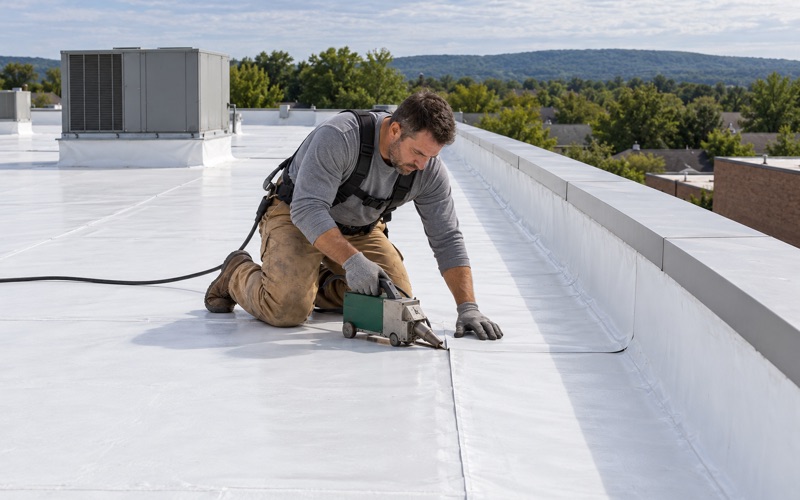
A roofer welding a TPO seam on the flat roof of a one-story strip retail building in Lower Paxton Township.

Commercial Roofing

Low-slope commercial roof repair and replacement in Lower Paxton, with TPO, EPDM and modified bitumen systems and photo-documented scopes.

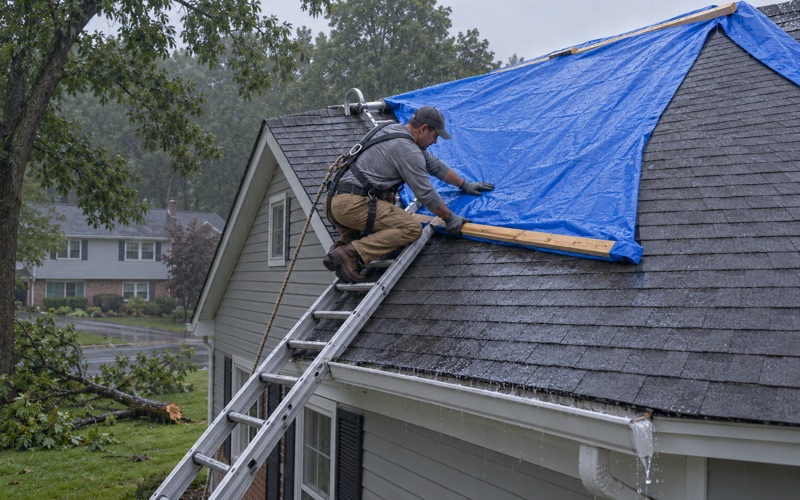
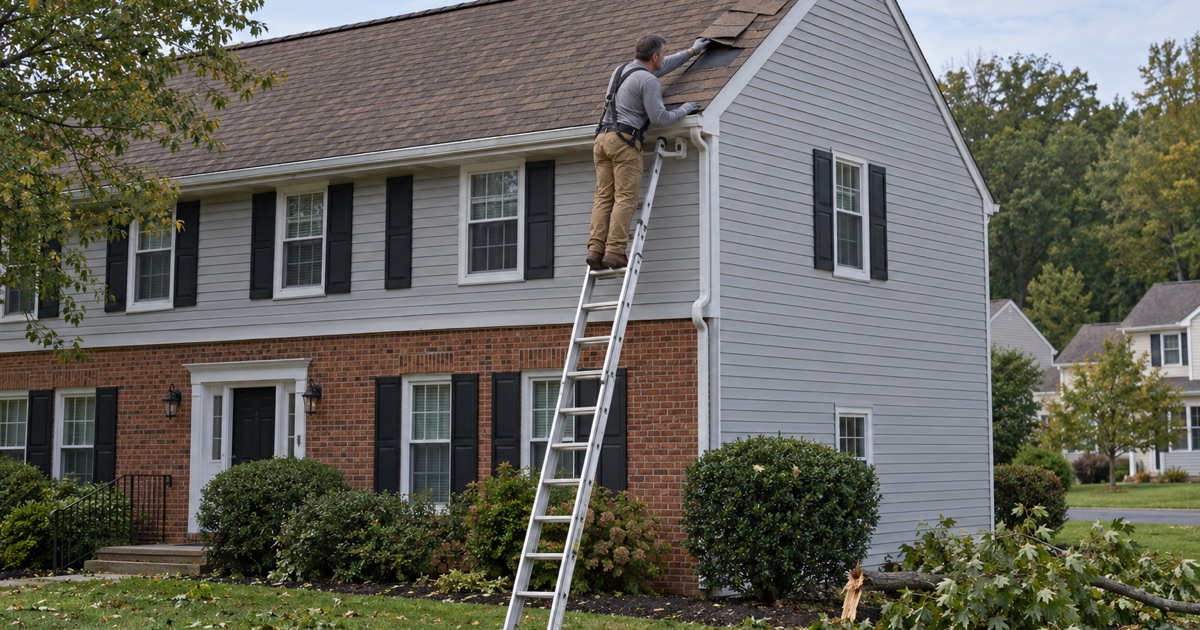
A roofer fastening a tarp over the ridge in steady rain on a 1970s colonial in Lower Paxton Township after a limb came through the roof.

Emergency Roof Repair

Emergency tarping, dry-in and storm repairs in Lower Paxton when a roof is leaking now, with damage photographed for your claim.

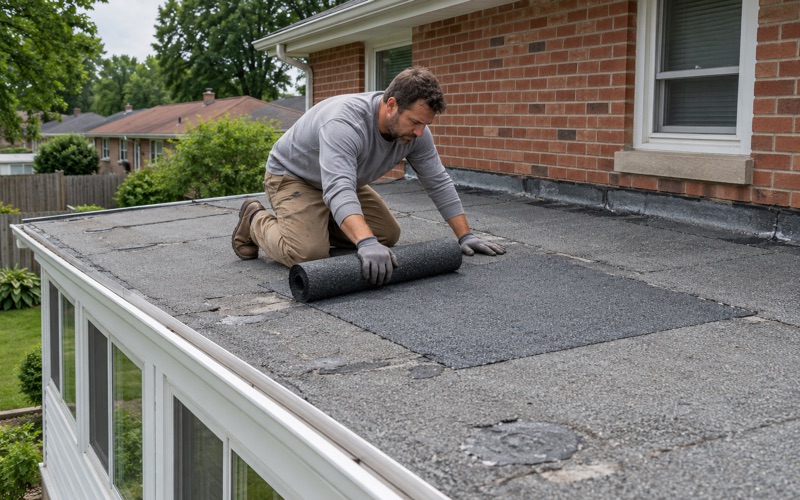
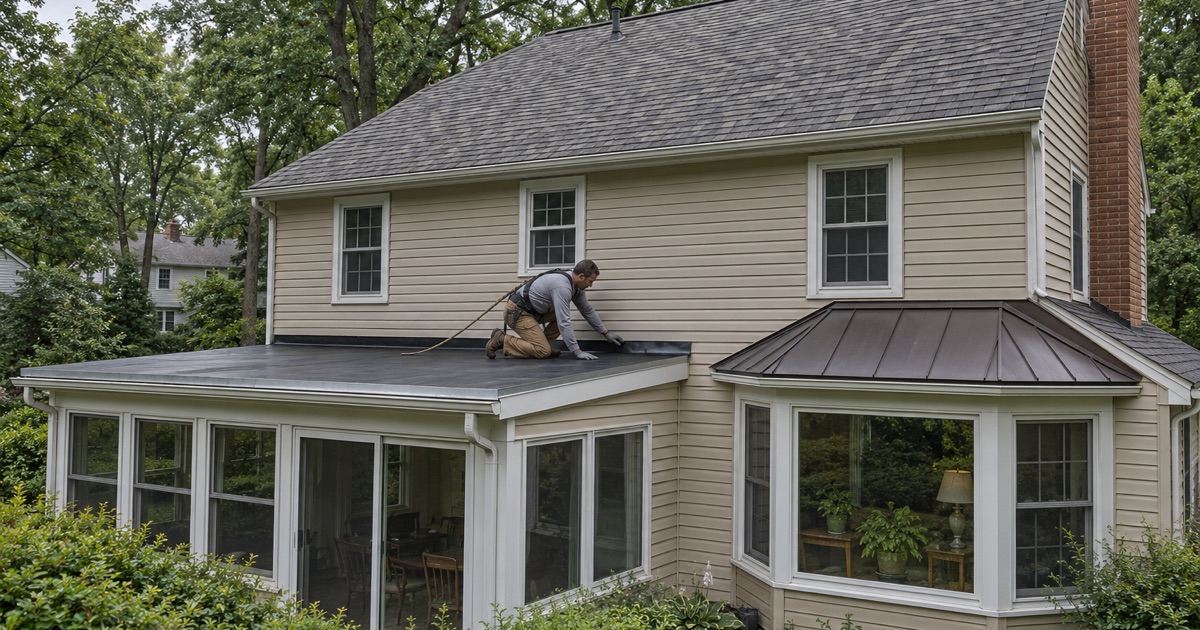
A modified bitumen patch going down on the low-slope roof of a rear sunroom on a 1960s ranch in Lower Paxton Township.

Flat Roof Repair

Flat and low-slope roof repair on Lower Paxton porches, additions and garages, patched with the same membrane system already on the roof.

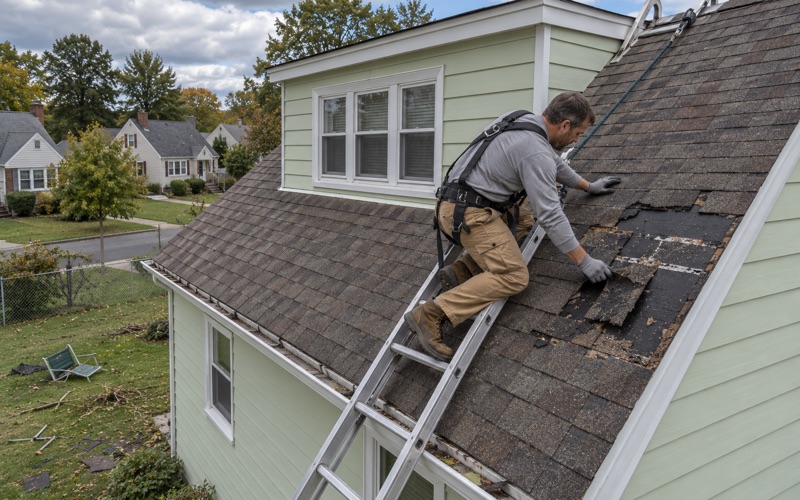
A roofer pulling the torn remains of wind-stripped shingles off the rear slope of a 1950s Cape Cod in Lower Paxton Township before patching it.

Storm Damage Roof Repair

Wind, hail and fallen-limb roof damage repaired in Lower Paxton, documented with photos for the homeowner's own insurance claim.

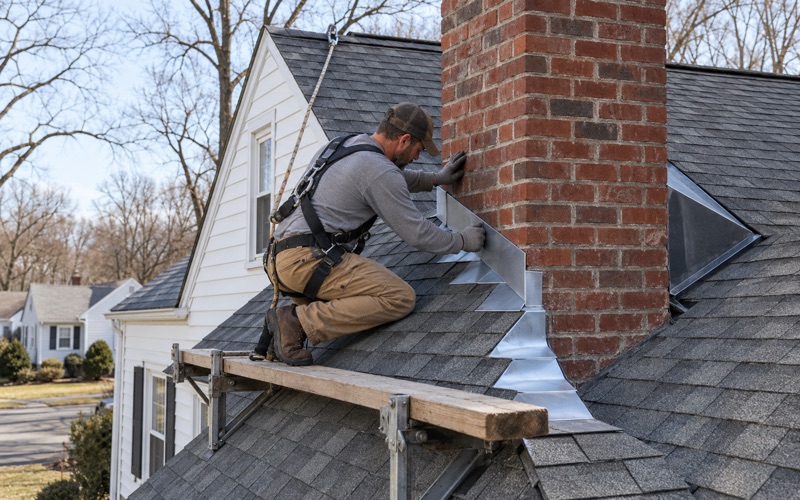
New counter flashing set into a cut mortar joint on the brick chimney of a 1950s Cape Cod in Lower Paxton Township.

Chimney Flashing Repair

Chimney flashing rebuilt in Lower Paxton with new step and counter flashing, reglet cuts and crickets where the chimney needs one.

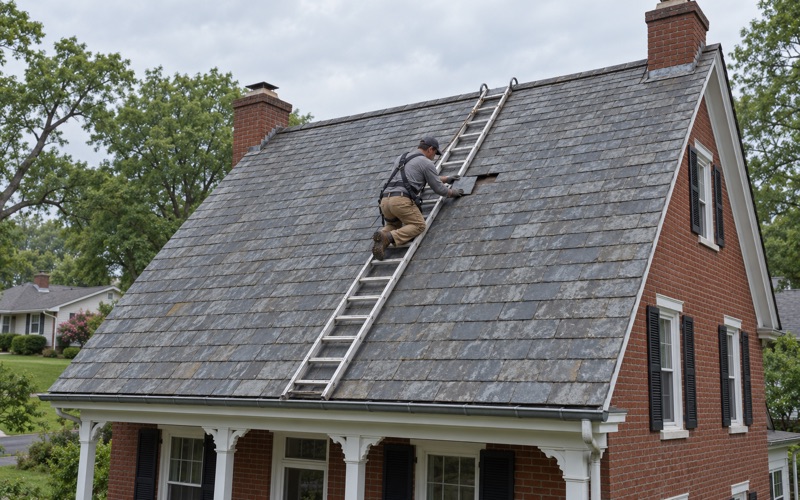
A roofer sliding a replacement slate into place from a roof ladder on an old brick farmhouse in Lower Paxton Township.

Slate Roof Repair

Slate roof repair in Lower Paxton, replacing broken and slipped slates one at a time with copper nails and slate hooks.

Two Decades on Central Pennsylvania Roofs

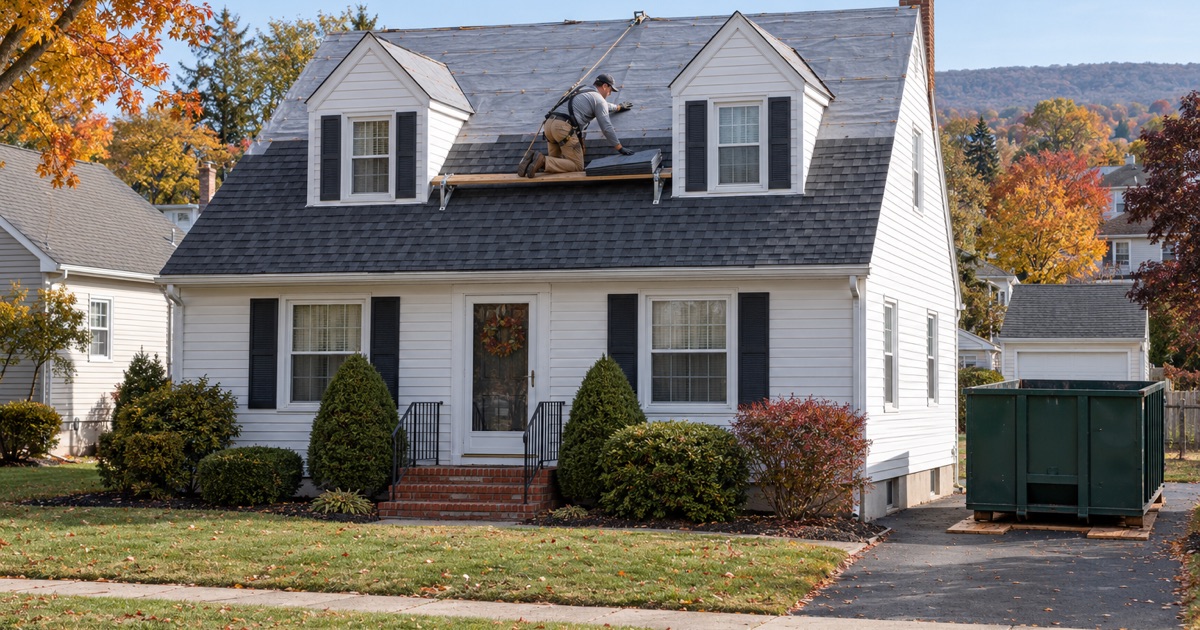
A roofer moving a bundle of shingles along the toe board on the new roof of a 1950s Cape Cod in Colonial Park, Lower Paxton Township.

20+ Years of Roofing Experience

We have spent more than 20 years repairing and replacing roofs, and most of what that time teaches is about the parts of a roof nobody sees from the street. Flashing, decking, ventilation and the condition of the attic decide how long a roof lasts far more than the shingle color does. That experience is why our estimates start in the attic and why our scopes break the job into its real components.

Why Choose Lower Paxton Roofing

Leaks Traced From the Attic

Every leak call includes a trip into the attic as well as onto the roof, so the water is followed to where it actually enters before a dollar is priced, rather than patching the shingles above a ceiling stain and hoping the drip stops.

Your Township’s Permit Rule

Lower Paxton’s own permit chart says replacing shingles needs no building permit unless the structure changes, while neighboring boroughs publish different rules. We check the rule for the municipality your house sits in before pricing, so a permit fee never appears after the contract is signed.

Repair Answer Comes First

No replacement is priced until we have told you, in plain words, whether a repair will hold. Many roofs here are on their second or third covering, and a failed pipe boot or tired chimney flashing is a repair job rather than an excuse to sell a whole new roof.

Line-Item Roof Estimates

Tear-off, decking, underlayment, flashing, ventilation and gutters each get their own line, so two estimates can be compared item by item rather than as two totals with no way to see what is inside them.

Contracts Written to Pennsylvania Law

Our contracts follow Pennsylvania’s Home Improvement Consumer Protection Act, including the three-business-day cancellation notice and a deposit kept within the legal limit, so the terms you sign match what the statute requires rather than what a door-knocker finds convenient.

Roof Leaks and Repairs

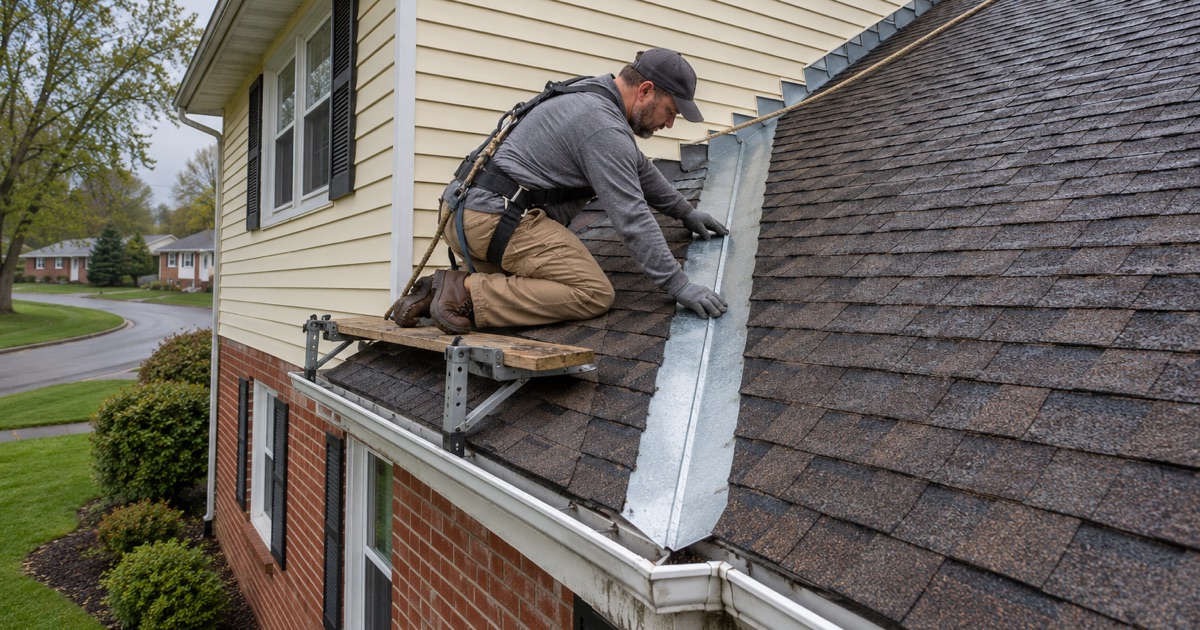
A roofer re-laying the open metal valley over a leak on a 1960s split-level in Paxtonia, Lower Paxton Township.

Finding a Roof Leak, a Plumbing Leak or Condensation

Not every wet ceiling is a roof leak. Water that appears on dry days often comes from a bathroom supply line or a condensation problem in a poorly vented attic, where warm house air meets a cold deck and drips back down. We check the attic for frost, damp insulation and staining patterns before anyone climbs a ladder, because the fix for each cause is completely different.

Ceiling Water Stains After Rain

A brown ring on the ceiling after a storm tells you water got in, but not where. Water runs along rafters and the top of drywall before it shows, so the entry point can be several feet uphill from the stain. We trace it from the underside of the deck to the roof surface, photograph what we find, and price the repair at the actual source.

Chimney, Vent Pipe and Skylight Leaks

Penetrations cause more leaks than open shingle fields do. Cracked rubber pipe boots, lifted step flashing and failed skylight seals let water in long before the shingles around them wear out. We replace pipe boots with rubber or lead flashing boots, rebuild step and counter flashing at the chimney, and reseal or reflash skylights instead of smearing roofing cement over the gap.

Shingles Blown Off in a Windstorm

Shingles that tear loose usually fail along the sealant strip, either because they never sealed in cold weather or because the strip has aged out. We replace missing tabs with matching material where it is still available, check that the surrounding shingles are still bonded, and tell you honestly if the field is too brittle to patch. Shingles rated ASTM D3161 Class F or D7158 Class H are an option on a replacement.

Ice Dams Along the Eaves

Ice dams form when attic heat melts snow higher on the roof and the water refreezes at the cold overhang, backing up under the shingles. The lasting fix is attic air sealing and ventilation, plus the ice barrier the code calls for at the eaves. On a replacement we install a self-adhering ASTM D1970 membrane along the eaves in line with IRC R905.1.2, rather than relying on felt.

Water Behind the Gutter and Fascia

Water that runs behind a gutter rots the fascia board and can soak the top of the wall. The usual cause is a missing drip edge or a gutter hung too low, so roof runoff slips between the shingle edge and the gutter back. We add drip edge at the eaves, correct the gutter height and pitch, and replace rotted fascia before the gutter goes back on.

Repairing or Replacing a Leaking Roof

A single leak on an otherwise sound roof is a repair. Widespread granule loss, curling shingles, soft decking in several places or a roof already carrying two layers point toward replacement. We weigh the roof’s age, condition and how many repairs it has already had, and we put our recommendation in writing with the reasons, so the decision is yours rather than a sales pitch.

If a Roofer Falls on Your Property

Homeowners ask this more than they expect to. Federal OSHA rules call for fall protection on residential roofing at six feet, and a contractor’s own insurance is what should respond when a worker is hurt. Before any roofer starts, ask for a current certificate of liability and workers’ compensation insurance naming the business, and read it rather than taking a verbal assurance.

Replacing a Roof on a Lower Paxton House

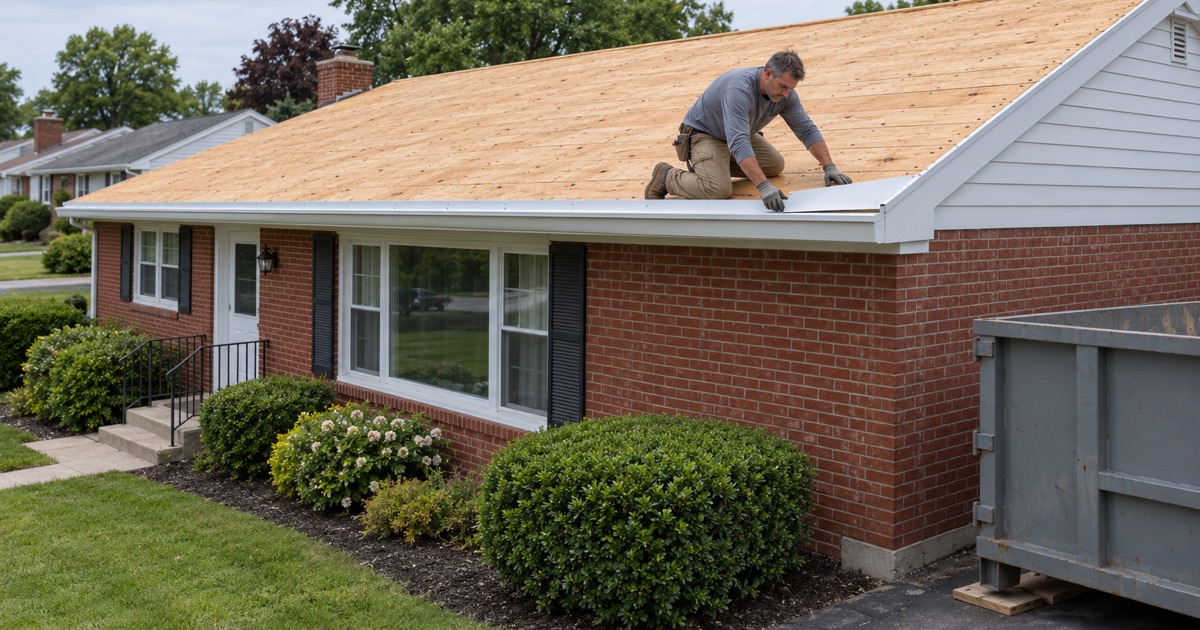
New drip edge going on along the eave of a 1950s brick ranch in Lower Paxton Township after the old roof came off to the deck.

Roof Replacement Permits in Lower Paxton Township

Lower Paxton Township’s “When Do I Need a Permit” chart lists a roof as needing a building permit only if structural changes are made, and not for replacing shingles, with no zoning or stormwater permit for the roof itself. When a job does involve structural work, the township’s 2026 application charges $9 per $1,000 of the project with a $350 minimum, plus an $80 review fee and the $4.50 state fee.

Re-Roof Permits in Other Pennsylvania Townships

Pennsylvania’s Uniform Construction Code excludes repairs to residential buildings unless a local ordinance says otherwise, under 34 Pa. Code 403.1(b)(9), which is why every municipality sets its own re-roof rule. The City of York, for example, requires a permit when more than 25% of any one roof surface is replaced. We look up the rule for your exact municipality before we price the job.

A Full Tear-Off, Dumpster to Nail Sweep

A tear-off starts with protecting landscaping and siding, then stripping the roof to the deck. In Lower Paxton a dumpster on your property needs a zoning permit and plot plan and may stay 30 days, while one on the street goes through township dispatch. After the deck is inspected, new drip edge, ice barrier, underlayment, flashing, shingles and ridge vent go on, and the day ends with a magnet sweep.

Roof-Over Versus Tear-Off

A second layer over an existing roof saves tear-off cost but hides the decking, traps old flashing and adds weight. IRC R908 limits a roof to two layers of asphalt shingles, and a roof that already has two must come off. We usually recommend tearing off, because the condition of the deck is the one thing we cannot judge from on top of an old roof.

Picking a Shingle Color for Brick and Siding

Shingle color shows across the whole house for decades, so we bring full-size samples and look at them against your brick, stone or siding in daylight. Warm brick usually pairs with browns and weathered woods, and gray or white siding with charcoals and slates. Lighter shingles reflect more heat, which matters on an attic with marginal ventilation.

Soffit Intake and Ridge Exhaust Ventilation

An attic needs air coming in low and leaving high, and the two must be balanced. We size ridge vent with soffit intake by net free area, open blocked soffits, and remove mismatched vents that short-circuit the airflow. Good ventilation reduces ice dams in winter and heat buildup in summer, and many shingle warranties expect it.

Re-Roofing Under Solar Panels

A roof carrying solar panels has to be planned around the array. We put panel removal, storage and reinstallation into the schedule from the start and coordinate with your solar installer, rather than discovering on the first morning that the panels have to come down. If your roof is near the end of its life, replacing it before panels go on avoids paying for that work twice.

Who Owns a Townhouse Roof in Pennsylvania

In a Pennsylvania planned community, the unit is usually the lot and the house, so the owner holds the roof unless the declaration says otherwise. Condominiums under the Uniform Condominium Act often treat roofs as common elements maintained by the association. We ask to see the declaration or the association’s rules before quoting, so the right party approves and pays.

The Roof on a Seller Disclosure and Buyer Inspection

Pennsylvania sellers disclose known roof problems on the seller property disclosure statement, and buyers’ inspectors look closely at roofs. A documented repair with photos and a written scope answers questions far better than a patch done the week before listing. We provide that paperwork for every repair, so it can travel with the sale.

Shingles, Slate, Metal and Flat Roofs

An asphalt main roof, a steel bay roof and a flat rear porch roof on one 1970s colonial in Lower Paxton Township.

3-Tab, Architectural, Designer and Impact-Rated Shingles

Three-tab shingles are flat, single-layer and now uncommon on replacements. Architectural laminated shingles, such as GAF Timberline HDZ, Owens Corning Duration or CertainTeed Landmark, add a second layer for depth and wind resistance. Designer shingles imitate slate or shake, and UL 2218 Class 4 shingles are built to resist hail impact. We price the options side by side so you can see what each costs.

Slate Roof Repair on Older Houses

A sound slate roof can outlast several asphalt roofs, so we repair it before anyone talks about tearing it off. Broken or slipped slates are replaced one at a time with copper nails and slate hooks, and failed flashing is replaced in copper or lead-coated material. We tell you when the slate itself is failing, but most calls we see need repair, not replacement.

Standing Seam Metal Roofing and Metal Accents

Standing seam metal panels run from ridge to eave with raised, concealed-fastener seams, which keeps water away from exposed screws. It suits low-pitch sections, porches and bay roofs where shingles struggle, and full roofs where an owner wants a long service life. We detail the transitions where metal meets shingle so the joint does not become the next leak.

Torch-Down, EPDM and TPO on Low-Slope Roofs

Shingles need pitch to shed water, so low-slope sections need a membrane. Torch-down SBS and APP modified bitumen builds up layers fused to each other, EPDM rubber membrane is a single sheet with sealed seams, and TPO and PVC single-ply membranes have heat-welded seams. We match the membrane to the roof’s slope, its foot traffic and what is next to it.

Flat Roofs on Additions, Porches and Garages

Rear additions, kitchen bump-outs, porch roofs and attached garages are where many low-slope roofs hide on otherwise pitched houses. The weak point is usually where the flat section meets the wall or the main roof. We flash those joints properly, build in enough slope for water to drain, and make sure the membrane turns up the wall rather than stopping at it.

Gutters, Downspouts and Gutter Guards

We size and pitch gutters and downspouts with the roof, because they carry every drop the roof sheds. Seamless aluminum gutters avoid the joints where sectional runs leak, and downspouts are placed so water leaves the foundation. Lower Paxton’s own stormwater tips tell residents to keep downspouts and gutters clear, and guards can help on lots under heavy tree cover.

Storms, Insurance and Paying for a Roof

A roofer checking wind-lifted shingles along the rake of a 1980s colonial in Lower Paxton Township the morning after a September storm.

First Steps After Storm Damage

Photograph the damage from the ground and inside the house before anything is moved, then stop further water entry with a tarp or temporary repair. Keep every receipt, because reasonable emergency costs are part of most claims. We photograph and write up storm damage for the owner’s own claim, and we dry in an open roof quickly so a storm does not turn into a ceiling.

Pennsylvania Roof Claims and Insurer Deadlines

Pennsylvania’s unfair claims rules in 31 Pa. Code 146 set timelines for insurers. A company must acknowledge a claim within 10 working days, complete its investigation within 30 days of notice or explain in writing why it needs longer, with an update every 45 days after that, and accept or deny within 15 working days after receiving a properly executed proof of loss. Knowing those dates helps an owner keep a claim moving.

Public Adjusters and Who Negotiates Your Claim

Under Pennsylvania’s Public Adjuster Licensing Law, only a licensed public adjuster may negotiate a claim on a homeowner’s behalf for a fee. A roofer may not. We document the damage, write up the scope and will meet your adjuster on site when asked, but the claim stays between you and your insurer, and we never promise a roof will be free.

Insurance and a 20-Year-Old Roof

An older roof can still be covered for sudden storm damage, but the policy decides how much is paid. Replacement cost coverage pays to replace the roof without subtracting depreciation, while actual cash value pays the depreciated amount, which can be small on an aging roof. Read the roof section of your policy before a storm, so the payout is not a surprise after one.

No Separate Sales Tax Line on a Pennsylvania Roof Estimate

In Pennsylvania, a contractor installing a roof as a permanent improvement generally pays sales tax on the materials when buying them, under 61 Pa. Code 31.11-31.12, rather than charging it to the homeowner as a separate line. That is why our roof estimates show no sales tax line. It is a feature of state law, not a missing item.

Pennsylvania Home Improvement Contracts and Deposit Limits

The Home Improvement Consumer Protection Act requires a written home improvement contract that carries the contractor’s registration number. The owner has a three-business-day right to cancel, and on a contract over $5,000 the deposit is capped at one-third of the price under 73 P.S. 517.9. A contract with no cancellation notice, or a demand for half the price up front, deserves a second look.

Roofing License or Registration in Pennsylvania

Pennsylvania has no statewide roofing license. Instead, home improvement contractors doing more than $5,000 of work a year must register with the Attorney General under HICPA, and owners can check a registration number on the Attorney General’s site. A local page claiming a “Pennsylvania roofing license” is usually describing that registration under the wrong name.

The 25 Percent Rule Is Florida’s

Many homeowners have heard that replacing more than 25% of a roof forces a full replacement. That rule comes from the Florida Building Code, not from Pennsylvania’s UCC. Here, repair permits depend on local ordinance, and a municipality such as the City of York sets its own 25% permit threshold. A permit threshold is not a rule that you must replace the whole roof.

Areas We Serve

Lower Paxton Roofing provides roofing throughout the greater Lower Paxton area, with the same crews and the same standards on every job.

Good to know

Frequently Asked Questions

How much does a roof replacement cost in Lower Paxton?

It depends on the roof's size and pitch, how many layers come off, how much decking is damaged and which shingle or metal system goes back on. We do not quote a square-foot figure over the phone. We measure the roof, look in the attic, and hand you a written scope with each part of the job priced on its own line.

How long does a typical re-roof take?

Most asphalt tear-offs on a single-family house are finished in one to three working days once materials are on site, with weather the main variable. Slate, metal and low-slope work take longer. We give you a schedule with the scope, and we never leave a roof open overnight without it being dried in.

Do you charge for a roof estimate?

No. The estimate includes a look at the roof surface, the flashing and the attic, and it ends with a written answer on whether the roof can be repaired or needs replacing. You keep the scope whether or not you hire us.

What shingles do you install?

Most of our replacements use architectural laminated shingles, such as GAF Timberline HDZ, Owens Corning Duration or CertainTeed Landmark, over synthetic underlayment. Where an owner wants more storm resistance we can price shingles rated UL 2218 Class 4 for impact. We also install standing seam metal and low-slope membranes.

Can you work in the winter?

Repairs and emergency dry-ins happen year round. Shingles need warmth to seal, so full asphalt replacements in the coldest weeks are scheduled around the forecast, and we explain the trade-off rather than rushing a job that will not seal properly.

Will you haul away the old roof?

Yes. Tear-off debris goes into a dumpster or trailer, and in Lower Paxton a dumpster on the property needs a zoning permit while one on the street goes through township dispatch. We plan where it sits before the job starts and sweep the yard with a magnet every day.

Do you repair roofs on rental and investment properties?

Yes. Landlords get the same attic-and-roof inspection and the same itemized scope as owner-occupants, with photos they can review without being on site. We will coordinate access with tenants when the owner asks us to.

Is a roof warranty included?

Shingle manufacturers warrant their materials, and the terms depend on the product and how it is installed. We explain the specific manufacturer coverage for the system we quote, in writing, so you know what is covered before you sign.

What should I do while I wait for a roofer after a leak?

Move belongings out from under the drip, catch the water in a bucket, and photograph the ceiling and anything damaged. Do not climb onto a wet roof. Keep receipts for anything you buy to stop further damage, since your insurer may ask for them.

Ready to Get Started?

Request a free quote today and we'll get back to you fast.