
Lower Paxton Roofing installs gutters in Lower Paxton, PA and has more than 20 years of roofing work behind it, serving surrounding cities including Linglestown, Progress, Susquehanna Township, Harrisburg and Hummelstown. We treat gutter installation as part of the roof system rather than an add-on, because gutters and downspouts carry every drop of water the roof sheds.
A gutter that is undersized, hung too low or pitched the wrong way will overflow, spill behind the fascia or dump water at the foundation, however good it looks from the street. We size each run to the roof area above it, pitch it to its downspout, and check the drip edge and fascia before a single bracket goes up.
The result is a gutter system that keeps water off your siding, out of your basement and away from the roof edge, and an itemized price that shows gutters, downspouts, guards and any fascia repair as separate lines.
Seamless Gutter Installation
Seamless Aluminum Gutters
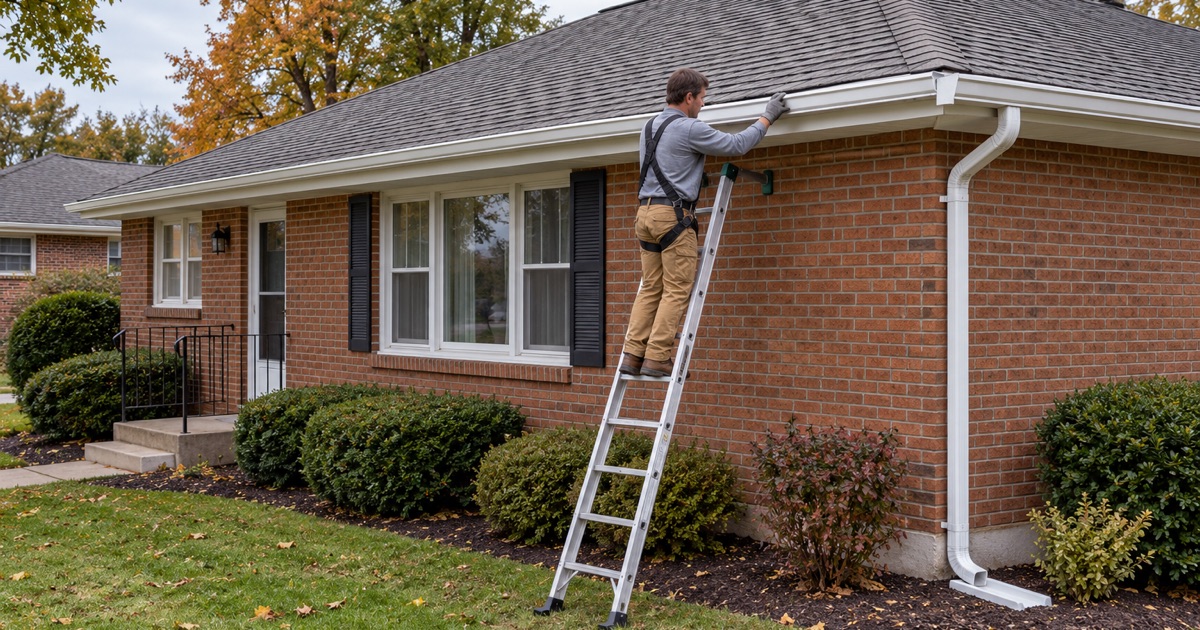
We install seamless aluminum gutters, formed on site in continuous lengths to fit each run of the house. With no joints along the straight runs, there are far fewer places for sealant to fail and water to drip. K-style gutters are the most common profile and suit most houses here, with half-round available where the architecture calls for it.
Aluminum does not rust, holds its factory finish for years and is light enough to hang securely on most fascia boards. We fasten it with hidden hangers spaced close enough to carry the weight of water, snow and ice without the gutter pulling away from the house.
Sizing Gutters to the Roof
Gutter size is a calculation, not a habit. A steep roof sheds water faster than a shallow one, and a long run collecting from a large roof plane carries more water than a short run over a porch. We look at the roof area and pitch draining to each run and choose 5-inch or 6-inch gutters to match.
Where a valley pours concentrated water into one spot, we may add a downspout nearby or use a larger gutter on that run. Undersizing is the most common reason we see gutters overflowing in a heavy storm even though they are clean.
Downspout Size and Placement
Downspouts empty the gutters, and too few or too small downspouts cause overflow even on a well-sized gutter. We place downspouts so no run carries too much water to a single outlet and size them to the gutter above. Where the layout allows, larger downspouts drain faster and clog less often.
At the bottom, downspouts need to send water away from the foundation. Extensions, splash blocks or a connection to an approved drain keep roof runoff from soaking the ground right beside the basement wall.
Getting the Roof Edge Right
Drip Edge and the Gutter Line
Drip edge is the metal flashing along the eaves that guides water off the roof and into the gutter. Without it, water can curl back under the shingle edge and run behind the gutter, rotting the fascia and soaking the top of the wall. Many older houses never had drip edge installed.
We check for drip edge before hanging gutters, and add it if it is missing. The gutter is then hung so its back sits under the drip edge and its front sits low enough to catch the water coming off the shingles, rather than letting runoff overshoot or slip behind it.
Fascia and Soffit Repair
Old gutters often hide rotted fascia boards. Before new gutters go up, we inspect the fascia along every run, replace soft or rotted sections, and check the soffit for damage where water has been getting in. Hanging new gutters on rotten wood guarantees they will pull away.
On houses built before 1978, painted fascia and trim may contain lead paint. Disturbing it is covered by the EPA’s lead-safe renovation rule, so the condition of the trim affects how any fascia work is done and priced.
Pitch Toward the Downspout
Gutters need a slight, steady slope toward each downspout so water keeps moving. Too little pitch leaves standing water that breeds debris and adds weight; too much and the gutter looks crooked from the street. We set the pitch run by run, and on long runs we pitch from the middle toward downspouts at each end.
Gutters on Commercial and Multifamily Buildings
Apartment buildings, offices and retail buildings carry much larger roof areas, and their gutters and downspouts have to handle far more water per run. We size commercial gutters and leaders to the roof area draining to them, and on low-slope roofs we coordinate gutters with scuppers and roof drains so water leaves the roof without overflowing at the edge.
Heavier-gauge material and closer hanger spacing make sense where ladders, snow load and maintenance crews put more stress on the system. The scope lists gutter size, downspout size and hanger spacing so a property manager can see exactly what is being installed.
Gutters and Stormwater in Lower Paxton
Where the Water Goes
Lower Paxton Township’s ordinance divides the township into three watersheds: Paxton Creek, Spring Creek and Beaver Creek. The township’s stormwater tips ask residents to clear roof downspouts and gutters of debris and not to discharge sump pump water to the street. A gutter system is the first step in managing the water that leaves your roof.
We place downspouts so the discharge spreads onto your own ground and away from the house, rather than concentrating it at a property line or a neighbor’s foundation. Where drainage on a lot is already a problem, we point that out so it can be addressed alongside the gutters.
Gutters During a Roof Replacement
The best time to install new gutters is during a roof replacement. The roof edge is open, the drip edge is new, and the gutters can be sized to the new roof’s runoff. We plan gutters and downspouts with the roof rather than treating them as an afterthought, so the two are installed as one system.
If your existing gutters are in good condition and correctly sized, we can remove them for the roof work and reinstall them afterward. The scope shows both options so you can choose.
Gutter Guards and Maintenance
Choosing a Gutter Guard
Gutter guards reduce how often gutters need to be cleaned, which matters on lots under mature trees. Screen and micro-mesh guards keep out leaves and most smaller debris, while surface-tension designs shed debris over the front edge. Each has trade-offs, and we recommend one based on the trees around your house and the pitch of your roof.
No guard is maintenance-free. Pine needles, seed pods and fine grit can still collect on top, and the guards themselves need occasional rinsing. We explain the upkeep honestly so you know what you are buying.
Keeping Gutters Working
Even well-installed gutters need attention. Clearing them in late fall and again in spring, checking that downspouts run freely and looking for sagging after heavy snow all extend their life. If a section starts to overflow or pull away, we can adjust the hangers, reseal a corner or replace a single run without replacing the whole system.
Watch for the signs that a gutter is no longer doing its job: water spilling over the front edge in moderate rain, stains or peeling paint on the fascia, mulch washed out below a corner, or a damp basement wall below a downspout. Each of those is cheaper to fix early than after the water has done its damage.
- 20+ Years Roofing
- Itemized Written Scopes
- Repair Before Replace